
Graphite Balls for Carbon Increase in The Steel Industry
Description
Technical Parameters
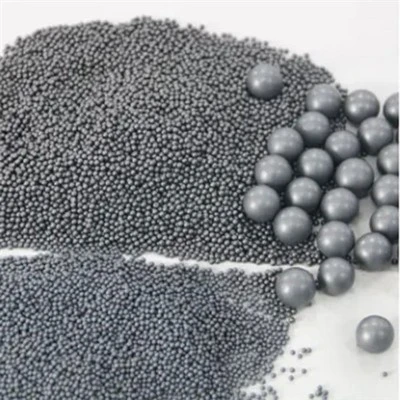
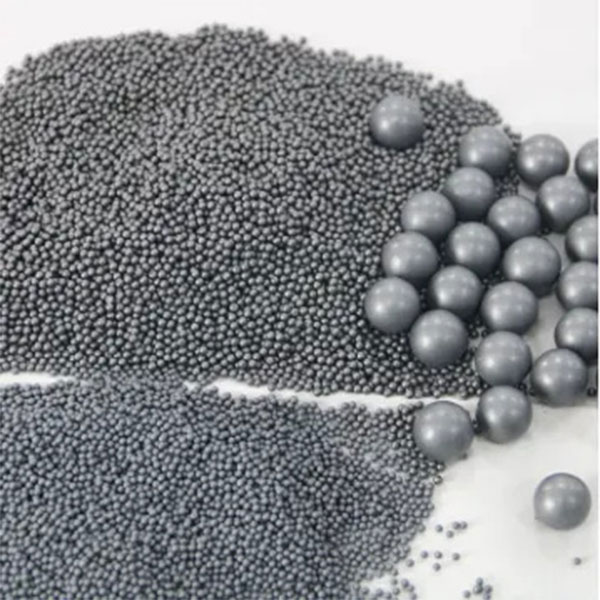
Graphite Carbon Raiser Balls are high-carbon additive materials designed for steelmaking and foundry applications where accurate carbon adjustment and low impurity input are required.
Made from selected graphite materials, these spherical carbon additives provide high fixed carbon content, stable carbon recovery and controlled ash and sulfur levels for EAF, induction furnace, converter and other melting processes.


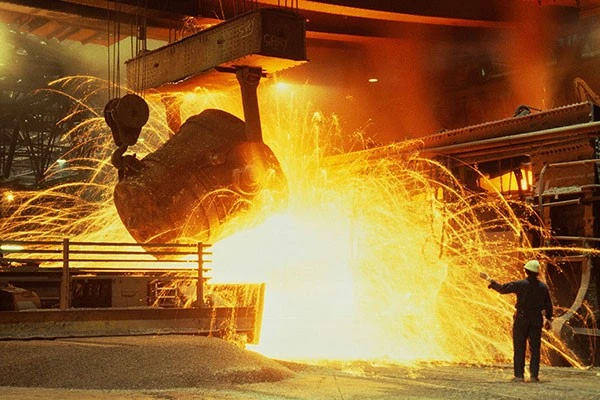
Carbon Graphite Material Data Sheet
| W-4 | W-5 | W-6 | W-7 | W-8 | WH-5 | WH-7 | WH-8 | ||
| Bulk density | G/cm³ | 1.75 | 1.85 | 1.9 | 1.82 | 1.9 | 1.68 | 1.85 | 1.9 |
| Resistivity | uΩm | 8-11 | 8-10 | 8-9 | 11-13 | 11-13 | 13-15 | 11-13 | 11-13 |
| Thermal conductivity(100℃) | W/m.k | 110-120 | 130-140 | 130-140 | 110-120 | 110-120 | 80-100 | 100-120 | 110-120 |
| Thermal expansion coefficient (room temperature - 600℃) | 10-6/℃ | 5.46 | 4.75 | 4.8 | 5.8 | 5.85 | 5.8 | 5.9 | 5.85 |
| Shore Hardness | HSD | 42 | 48 | 53 | 65 | 70 | 60 | 68 | 72 |
| Flexural strength | Mpa | 38 | 46 | 55 | 51 | 60 | 38 | 62 | 70 |
| Compressive strength | Mpa | 65 | 85 | 95 | 115 | 135 | 80 | 135 | 160 |
| Elastic modulus | GPa | 9 | 11.8 | 12 | 12 | 13 | 8.8 | 12 | 13 |
| Porosity | % | 17 | 13 | 11 | 12 | 11 | 18 | 12 | 11 |
| Ash | PPM | 500 | 500 | 500 | 500 | 500 | 500 | 500 | 500 |
| Purification of ash | PPM | 50 | 50 | 50 | 50 | 50 | 50 | 50 | 50 |
| Grain size | um | 13-15 | 13-15 | 8-10 | 8-10 | 8-10 | 8-10 | 7 | 5 |
| Application | Common use | Common use | Continuous casting, sintering, high temperature metallurgy | EDM,Photovoltaic | EDM,Photovoltaic,GLASS | EDM | Common use,EDM | EDM,Photovoltaic,GLASS |
Carbon Addition Performance
High Fixed Carbon Contribution
Graphite balls provide a concentrated carbon source for increasing or correcting the carbon content of molten steel while limiting the amount of non-carbon material introduced during charging.
Stable Carbon Recovery
Consistent graphite composition and particle size support stable carbon recovery during melting, helping reduce fluctuations in final carbon composition and improve heat-to-heat consistency.
Controlled Impurity Input
Controlled ash and sulfur levels help limit unwanted impurity input during carbon adjustment, supporting steel grades with defined chemical composition requirements.
Predictable Melting Performance
The spherical material form provides consistent handling and charging characteristics, helping steelmakers maintain more repeatable carbon addition from batch to batch.
Steelmaking Applications
Electric Arc Furnace (EAF)
Used for carbon adjustment during electric arc furnace steelmaking where the molten steel requires additional carbon to reach the specified composition.
Induction Furnace
Added during induction melting to correct carbon content according to the target steel composition and calculated carbon recovery.
Converter Steelmaking
Used as a carbon source during converter operations when additional carbon is required to achieve the specified molten-steel composition.
Alloy Steel Production
Used for carbon adjustment in alloy steel production where controlled carbon content is required to meet chemical composition specifications.
Stainless Steel & Specialty Steel
Used where carbon adjustment is required together with controlled impurity input and defined chemical composition requirements.
Foundry Melting
Used in ferrous-metal melting operations where controlled carbon addition is required before casting.
Carbon Addition Process
|
Stage |
Description |
|
Carbon Analysis |
Determine the carbon gap based on molten-steel analysis. |
|
Material Calculation |
Calculate the required addition quantity according to target carbon content and expected carbon recovery. |
|
Furnace Charging |
Add graphite balls through established automatic or manual feeding systems. |
|
Melting Process |
Carbon dissolves into the molten metal during heating and mixing. |
|
Final Composition Check |
Verify the resulting chemical composition through routine molten-steel analysis before casting or the next process stage. |
Customization Options
|
Customization Item |
Available Options |
|
Fixed Carbon |
95%–99% carbon grades |
|
Particle Size |
Φ5–10 mm, 10–20 mm, or customer-specified sizes |
|
Ash / Sulfur |
Specified according to the required steel grade |
|
Packaging |
25 kg woven bags, ton bags, or moisture-proof packaging |
Packaging & Delivery
|
Item |
Details |
|
Standard Packing |
25 kg woven bags are available for regular industrial orders. |
|
Bulk Packing |
Ton bags can be supplied for larger steelmaking consumption. |
|
Moisture Protection |
Moisture-resistant inner packaging can be used where required. |
|
Bag Identification |
Product grade, net weight, batch number and customer reference can be marked on the packaging. |
|
Palletizing |
Bags can be palletized according to the shipment and handling requirements. |
|
Export Documents |
Commercial Invoice, Packing List, Certificate of Origin and other required documents can be provided. |
Inspection Documents
Available quality documents can include:
Why Choose IUGIS Carbon
500+ Customers & 50+ Export Countries
IUGIS Carbon has supplied graphite and carbon products to 500+ customers in 50+ countries, covering industrial carbon materials and machined graphite components.
Material Quality Control
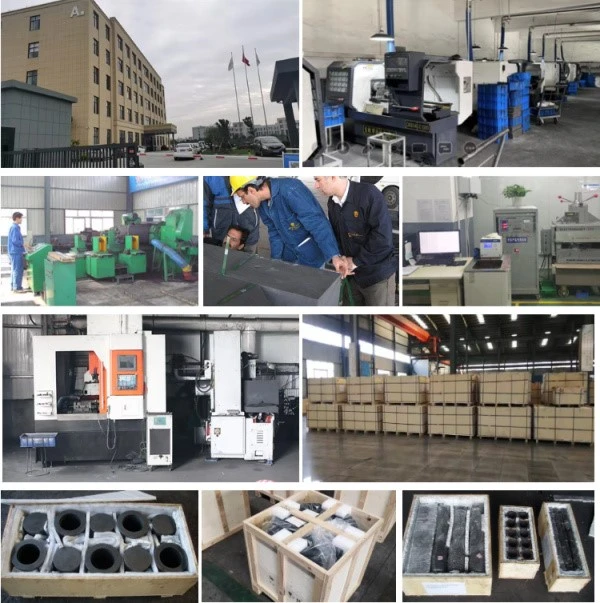
Incoming carbon materials are checked for carbon content, ash content, bulk density, particle-size distribution and microstructure before entering production.
Batch Traceability
Production batches can be identified through material records, inspection results and traceability information, supporting repeat orders and quality record management.
RFQ Information
For quotation, please provide:
- Required fixed carbon content
- Maximum ash content
- Sulfur limit
- Particle size
- Order quantity
- Packaging requirement
- Furnace type
- Delivery destination
FAQ
Q: What is the difference between graphite beads and graphite balls?
A: The terms are often used interchangeably for spherical graphite products. In industrial purchasing, the specification should be based on the required diameter, graphite grade, tolerance and application rather than the product name alone.
Q: How do I choose between standard and high-purity graphite?
A: High-purity graphite is preferred when the glass process has tighter limits on ash or foreign material. Standard grades can be used when the process specification permits higher impurity levels.
Q: Does graphite grade affect bead service life?
A: Yes. Graphite density, grain structure, mechanical strength and thermal properties can affect resistance to wear and thermal cycling. The material grade should therefore be matched to the operating conditions.
Q: Can graphite beads be supplied with a Certificate of Analysis (COA)?
A: A COA or equivalent inspection documentation can be supplied when it is included in the agreed quality-documentation requirements for the order.
Q: Can I purchase a small quantity for testing before a production order?
A: Trial or sample orders can be arranged before a bulk order so the bead dimensions and material can be evaluated in the customer's production process.
Q: What causes graphite beads to crack during use?
A: Cracking can result from mechanical impact, excessive thermal shock, improper handling or operating conditions outside the selected graphite grade. Handling and heating conditions should be controlled to avoid sudden mechanical or thermal stress.
Q: How should graphite beads be stored before use?
A: Keep the beads in their original protective packaging in a clean, dry storage area and protect them from moisture, contamination and mechanical impact.
Q: Can graphite beads from different graphite grades be mixed in one production process?
A: Different grades should not be mixed unless the production specification permits it. Material properties can vary between grades and may affect process consistency.
Q: What information should be checked before approving a graphite bead supplier?
A: The key items are graphite grade, bead diameter and tolerance, material inspection data, production consistency, quality documentation, packaging method and the supplier's ability to repeat the same specification for future orders.
Q: Can the same graphite bead specification be supplied for repeat orders?
A: Yes. Repeat orders can be manufactured against the confirmed product specification, including the agreed graphite grade, dimensions, tolerance and other applicable quality requirements.
Hot Tags: graphite balls for carbon increase in the steel industry, China graphite balls for carbon increase in the steel industry manufacturers, suppliers, factory, Copper Carbon Block For Making Carbon Brush, graphite ball, Graphite Balls, Graphite Beads, High Pure Graphite Ball Beads
Next
No InformationSend Inquiry