



Graphite Balls for Industrial & High-Temperature Applications
IUGIS Carbon supplies industrial graphite balls for OEM equipment, thermal-processing systems, chemical applications, electrical components and specialized industrial assemblies.


Graphite Ball Material Selection
The graphite material should be selected according to the actual application rather than simply choosing the highest-purity material.
Fine-Grain Graphite
Suitable where a more uniform structure, good machinability and improved surface finish are required.
High-Density Graphite
Higher-density materials can provide improved mechanical integrity and reduced open porosity compared with lower-density grades.
High-Purity Graphite
Used where ash or metallic impurities may interfere with the process.Typical applications may include selected thermal-processing, laboratory, semiconductor-related and chemical environments.
Impregnated Graphite
Graphite can be impregnated with materials such as resin, metals or other suitable substances to modify selected properties.The impregnation system should be selected according to temperature, chemical exposure, mechanical requirements and intended use.
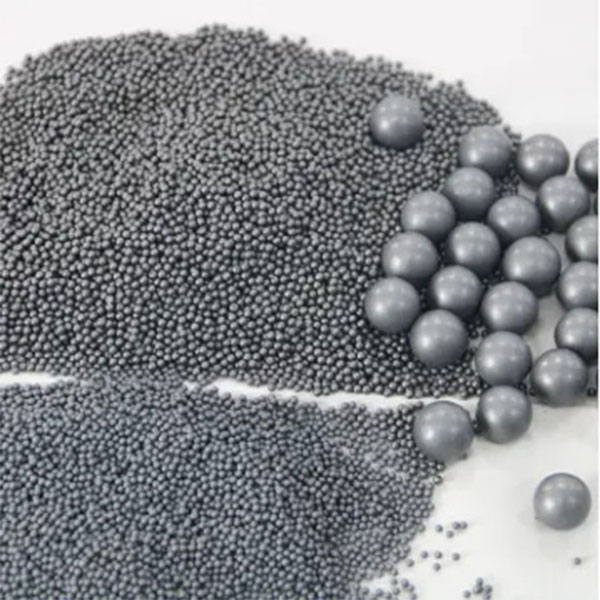
For precision OEM applications, we recommend defining: Nominal Diameter + Diameter Tolerance + Roundness + Surface Finish.
Diameter: Determines compatibility with the mating component or assembly.
Diameter Tolerance: Tighter tolerances available for automated assembly or controlled positioning.
Roundness: Critical for precision positioning, point contact, controlled movement, metering, and mechanical interfaces.
Surface Finish: Influences friction, contamination, contact behavior, and wear.
Solid vs. Hollow Graphite Balls
|
Parameter |
Solid Graphite Ball |
Hollow Graphite Ball |
|
Structure |
Fully dense, uniform material volume |
Internal cavity (vacuum-sealed or vented) |
|
Weight per Unit Volume |
Higher mass — suitable for load-bearing applications |
Lower weight — reduces inertia and system mass |
|
Manufacturing Complexity |
Simpler — direct machining or compression molding |
Requires controlled cavity formation and hydro-testing |
|
Typical Applications |
Check valves, metering pumps, high-pressure ball valves, mechanical seals |
Liquid level indicators, floating sensors, fuel tank level control, low-inertia systems |
|
Key Design Consideration |
Compressive strength and wear resistance |
Wall thickness uniformity and pressure integrity |
|
Test Parameter |
Sphericity tolerance (≤ 0.005–0.01 mm) |
Custom hydrostatic pressure test per application |
Carbon Graphite Ball Selection Guide – By Application & Media
|
Graphite Ball Type |
Impregnation Material |
Sphericity Tolerance |
Density & Hardness |
Primary Applications & Media |
|
Resin Impregnated Solid Ball |
Phenolic / Furan Resin |
≤ 0.005 – 0.01 mm |
High Density (~1.85 g/cm³) Shore ~85–100 |
Acid/Alkali check valve balls, liquid metering pumps, chemical pipeline ball valves (<200°C). |
|
Metal Impregnated Solid Ball |
Antimony / Babbitt |
≤ 0.005 – 0.01 mm |
Heavy Duty (~2.2–2.8 g/cm³) Extreme Hardness |
High-pressure hot oil valves, steam control systems, high PV slurry valves (<500°C). |
|
Hollow / Light-Weight Float Ball |
Vacuum Sealed Resin/Pyrolytic |
Custom Hydro-testing |
Tailored Buoyancy & Mass |
Corrosive liquid level indicators, fuel tank floating sensors, chemical boiler level controllers. |
|
High-Purity Graphite Sphere |
Pure Electro-Graphite |
Standard Industrial |
Ash < 50 ppm, Thermal Inert |
High-temperature gas flow meters, metallurgy melt degassing, nuclear/R&D thermal applications. |
We manufacture custom graphite balls based on engineering drawings, CAD files, existing samples, or specified diameter, tolerance, material grade, purity, density, surface finish, and geometry.
Custom Options
- Diameter:Standard or application-specific dimensions.
- Tolerance:Standard industrial or tighter per drawing.
- Surface:As-machined (Ra ≤ 1.6 µm), ground (Ra ≤ 0.4 µm), or precision-finished per spec.
- Geometry:Solid sphere, hollow sphere, sphere with hole, sphere with flat, or custom spherical geometry.

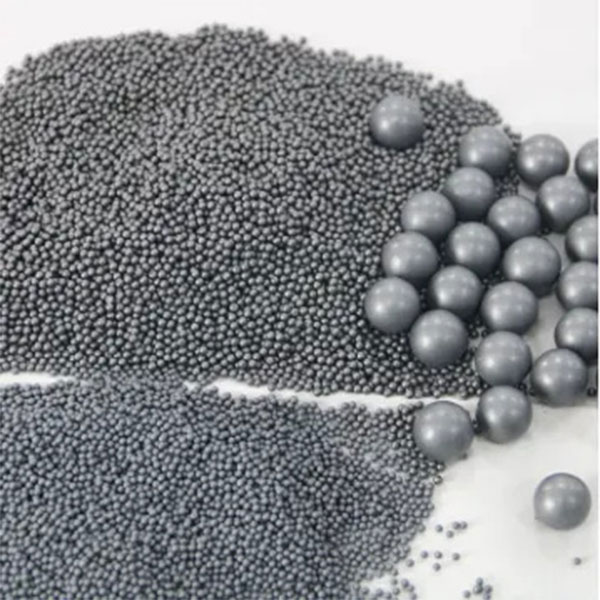
Manufacturing & Quality Control
Graphite balls require precise machining and inspection—spherical geometry is more difficult to control than simple cylindrical components. Our QC system covers every stage from raw material to finished product.
Raw Material Verification:We confirm graphite grade, density, and purity against the specified material certificate before production begins.
Diameter Measurement:Each ball is measured to ensure dimensional accuracy, with tolerances held as tight as ±0.005 mm for precision orders.
Roundness / Sphericity Inspection:We use precision measuring instruments to verify that the spherical surface stays within the agreed tolerance, critical for sealing and metering applications.
high quality
Surface Inspection:All surfaces are checked for cracks, chips, machining defects, and consistent finish quality.
advanced equipment
Weight Verification:For hollow or buoyancy-critical balls, we verify weight and mass consistency to ensure reliable float performance.
professional team
Dimensional Tolerance Inspection:Every critical dimension is checked against the approved drawing to ensure part-to-part consistency.
global shipping
Quantity Verification:Final count and packaging are confirmed before shipment to ensure order completeness.
Supply Support
The company conducted a competitive advantage analysis to identify its strengths and weaknesses compared to its rivals.
Flexible Quantities
Samples, pilot batches and production quantities can be discussed.
01
Specification Consistency
Approved material and dimensional specifications can be used for repeat orders.
02
Quality Inspection
Critical dimensions can be inspected according to agreed requirements.
03
Export Packaging
Packaging can be adapted to protect spherical components during international transportation.
04
Repeat Supply
Production references can be retained for recurring OEM orders.
05
Packaging & Shipping
Graphite balls are vulnerable to impact, chipping, and surface damage—especially when tight dimensional tolerances are required. Our packaging is designed to prevent contact damage during transit.
Packaging Options
Individual protective packaging, internal separators, anti-impact cushioning, reinforced cartons, plywood cases for larger shipments, customized labels, and packing lists.
Shipping Methods
Sea freight, air freight, or express—selected by order quantity and delivery urgency.
FAQ
With abundant experience, we are one of the most professional graphite ball manufacturers and suppliers in China. Please feel free to buy high quality graphite ball made in China here from our factory. Good service and quality products are available.
graphite ball, Graphite Balls, High Pure Graphite Ball Beads